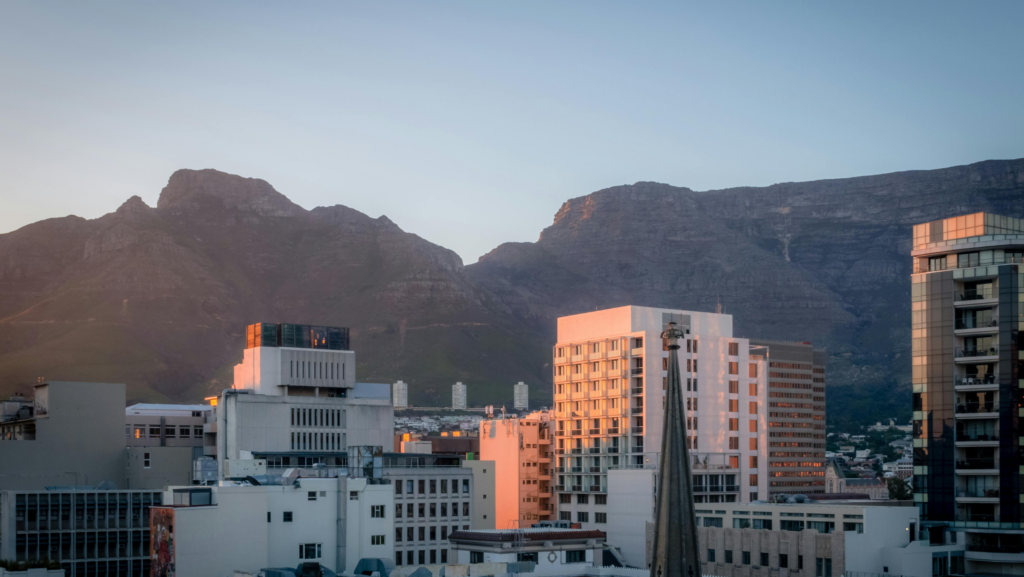
Everyone’s celebrating Cape Town’s property market. Prices up 8% last year. Fastest selling times in the country. Foreign money flooding the Atlantic Seaboard. Semigrants pushing demand beyond what the market can absorb.
I’m not celebrating. I’m worried.
Because behind every record sale in Camps Bay, behind every bidding war in Gardens, behind every sold-out development in the City Bowl, there are buildings that are structurally unprepared for the consequences of their own success.
The Boom Nobody Stress-Tested
Cape Town’s property surge has created a phenomenon I see in building after building: rapid ownership turnover without governance adaptation.
When a building’s ownership changes by 30% or 40% in two years (and this is happening across the City Bowl, Sea Point, Green Point, and the Atlantic Seaboard) the body corporate is essentially reconstituted. New owners bring different expectations. Investors who bought for yield want low levies and minimal maintenance spending. Semigrants from Gauteng expect governance standards that match what they left behind (or better). Foreign buyers don’t understand the STSMA and don’t attend meetings. Airbnb operators want maximum flexibility with minimum accountability.
The trustees who were elected by the previous ownership base suddenly find themselves governing a scheme whose stakeholders have fundamentally different priorities. And the managing agent, whose contract was negotiated in a different era, continues operating as if nothing has changed.
This is the governance timebomb. The building looks great on the outside. Fresh paint, nice entrance, good address. But inside the governance structure, the rules are outdated, the reserve fund is inadequate for the building’s age and condition, the insurance valuation hasn’t kept pace with the price appreciation, and nobody’s reviewed the management agreement in years.
The Insurance Trap
Let me give you a specific example that I encounter constantly and that should terrify every trustee in Cape Town.
Your building was valued for insurance purposes three years ago when the average unit in your scheme was worth R1.8 million. Today, comparable units are transacting at R2.5 million. But your insurance sum insured is based on the old valuation. If a fire, flood, or structural failure destroys or significantly damages the building, the insurer will invoke the average clause and pay out proportionally less than the full loss. The body corporate, meaning you the owners, carries the difference.
In a building of 40 units where the underinsurance gap is R700,000 per unit, that’s R28 million of uninsured exposure sitting on the balance sheet of a body corporate that doesn’t even know it.
Now multiply this across every body corporate in Cape Town that hasn’t revalued in the last two years. The aggregate exposure is staggering.
Whose job is it to ensure the building is properly valued? The trustees’. Whose job is it to advise the trustees that a revaluation is needed? The managing agent’s. Is it happening? In most buildings, no.
The Reserve Fund Illusion
Cape Town’s booming market has created a false sense of security among trustees. Property values are up, so the building must be in good shape, right?
Wrong. A building’s market value and its physical condition are two completely different things. I’ve inspected buildings where units are selling for R4 million and the common property is held together with deferred maintenance and optimism.
The Sectional Titles Schemes Management Act requires bodies corporate to maintain a reserve fund for future maintenance. The ten-year maintenance plan is supposed to guide how much gets set aside. In practice, most ten-year plans I review are either nonexistent, wildly optimistic, or haven’t been updated since the scheme was established.
The consequence is predictable: a major maintenance item materialises (waterproofing failure, lift replacement, facade remediation) and the reserve fund can’t cover it. The body corporate has to levy a special levy, which hits every owner simultaneously and disproportionately impacts those who can least afford it.
In a flat or declining market, this is manageable. In Cape Town’s current market, where many new owners have stretched their finances to buy in, a R50,000 or R100,000 special levy can trigger a cascade of forced sales, levy arrears, and scheme instability.
What Semigrants Don’t Understand (Yet)
The wave of buyers from Gauteng, and the growing number of returning expats from abroad, bring purchasing power and enthusiasm. What many don’t bring is an understanding of how differently Cape Town buildings operate compared to what they’re used to.
In Gauteng, sectional title governance has historically been loose. Many schemes operate with minimal compliance, outdated rules, and managing agents who’ve been in place for decades without competitive review. Owners from that environment often arrive in Cape Town expecting the same low-touch, low-levy model.
Cape Town’s reality is different. Coastal buildings face salt air corrosion, wind damage, moisture ingress, and higher insurance premiums. Mixed-use buildings with Airbnb operations face regulatory complexity that inland suburbs rarely encounter. The City’s evolving short-term rental bylaws and commercial rates reclassification add another layer of compliance that most body corporates haven’t planned for.
When a Gauteng buyer purchases a R3 million apartment in Sea Point and assumes levies of R2,500 per month will cover everything, they’re in for a rude awakening when the waterproofing bill arrives.
The Path Forward Isn’t Complex. It’s Just Unpopular
Nobody wants to hear that their building needs a governance overhaul. Trustees don’t want to do more work. Managing agents don’t want more scrutiny. Owners don’t want higher levies. Developers don’t want to fund adequate reserve contributions in the early years of a scheme.
But the alternative, waiting for the crisis and then scrambling, is always more expensive, more disruptive, and more damaging to property values than doing the work upfront.
Every body corporate in Cape Town should be doing three things right now.
Revalue the building for insurance. Not next year. Now. The gap between insured value and replacement cost is widening every quarter that prices increase. This is fiduciary negligence if trustees ignore it.
Stress-test the reserve fund against a realistic ten-year maintenance plan. If the reserve can’t fund the next major maintenance item without a special levy, the contribution rate needs to increase. Better a modest levy increase now than a R80,000 shock later.
Review the management agreement. When was it last benchmarked? Is it performance-linked? Does it reflect the current complexity of the scheme? If your building has gone from 20% investment units to 50% in three years, the management scope has changed. The contract should reflect that.
Cape Town’s property market is exceptional. The buildings that sustain its premium will be the ones where governance matches the price tag. The ones where it doesn’t will eventually correct. Painfully, expensively, and with consequences that hit every owner in the scheme.